RATES & YOUR BUDGET
A low rate is only part of the deal.
How to compare mortgage quotes without losing sight of the full cost.

THE SHORT ANSWER
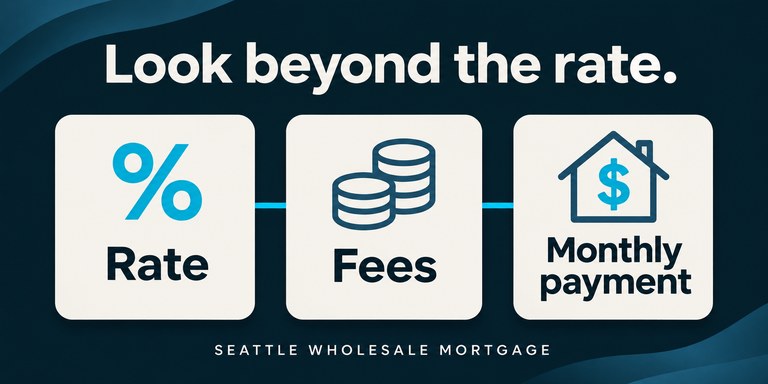
Look at the rate and what it takes to get it.
A low mortgage rate is useful when the loan’s fees, monthly payment, cash to close and terms fit your plans. Compare equivalent loan scenarios close together in time, using Loan Estimates when available. The lowest advertised rate may involve more upfront cost or assumptions that do not fit your loan. [2] [3]
Bring a written quote. I can help you understand the tradeoffs and compare the numbers using consistent loan details.
Make the comparison fair.
Before comparing two rates, line up the loan amount, down payment, loan type, term, property use and pricing assumptions. Check whether each quote is locked and whether the lock periods match. Rates can change between quotes. [2] [4]
Interest rate and APR answer different questions.
INTEREST RATE
The borrowing rate
The rate determines the interest charged on your loan balance. It does not include the loan’s additional fees. [1]
ANNUAL PERCENTAGE RATE
A broader cost measure
APR includes the interest rate and certain additional loan charges. Use it alongside the loan structure, cash required and how long you expect to keep the loan. [1]
APR is not a substitute for comparing the actual costs and terms. Take particular care when comparing fixed-rate and adjustable-rate loans, which can behave differently over time.
Points and lender credits change the tradeoff.
Discount points exchange upfront cost for a lower interest rate. Rate-related lender credits generally exchange a higher rate for reduced upfront costs. Neither choice is automatically better. [3]
If you pay more upfront for a lower payment, ask how long it takes for the payment savings to recover the additional cost. Then consider the shortest, most likely and longest periods you might keep the loan. [6]
Compare the loan for the plans you have today. A future refinance is not guaranteed.
For a cash-sensitive purchase, preserving funds can matter. For a loan you expect to keep longer, paying for a lower rate may deserve a closer look. The actual quotes will show the tradeoff.
Know the payment and the cash to close.
Your full housing budget may include principal and interest, mortgage insurance, property taxes, homeowners insurance and expenses paid separately, such as HOA dues. A principal-and-interest payment alone does not show everything. [5]
Cash to close combines the down payment and closing costs with adjustments for deposits and applicable credits. Use the Loan Estimate to see where the numbers come from and what may change.
Explore the mortgage calculators → Calculator results are estimates, not loan offers.
Before you choose, ask about the lock.
Confirm whether the rate is locked, when that lock expires and whether an extension would cost extra. Changes to the application can affect locked terms. Make sure the closing timeline works with the lock you are comparing. [4]
A useful quote-comparison checklist
- Same loan amount, down payment, program and term
- Interest rate and APR
- Discount points, lender charges and lender credits
- Mortgage insurance and full monthly housing cost
- Estimated cash to close
- Lock status, expiration date and extension terms
- Costs over the time you may keep the loan
CHECK THE SOURCE
Sources & information date
Reviewed November 3, 2026. Lender policies and loan requirements can change.
Educational information, not a rate advertisement or commitment to lend. No specific rate, approval or savings are promised. Actual terms depend on the borrower, property, program, lender, market and rate-lock terms. Review official loan disclosures before choosing financing.